How to Choose the Right TV Mount


Choosing the right TV mount is essential for creating a comfortable, safe, and stylish home entertainment setup. Whether you want to save space, improve viewing angles, or achieve a clean, modern look, the right TV mounting solution can make a big difference. There are many alternatives on the market, including TV wall mounts, ceiling mounts, TV stands, and more. It's easy to become overwhelmed. This guide will walk you through the key factors to consider when selecting the ideal TV mount.
1. TV Installation Styles
The first step in choosing the right TV mount is determining how and where your TV will be installed. Brateck offers a wide range of TV mounting solutions designed to suit different rooms, layouts, and viewing preferences.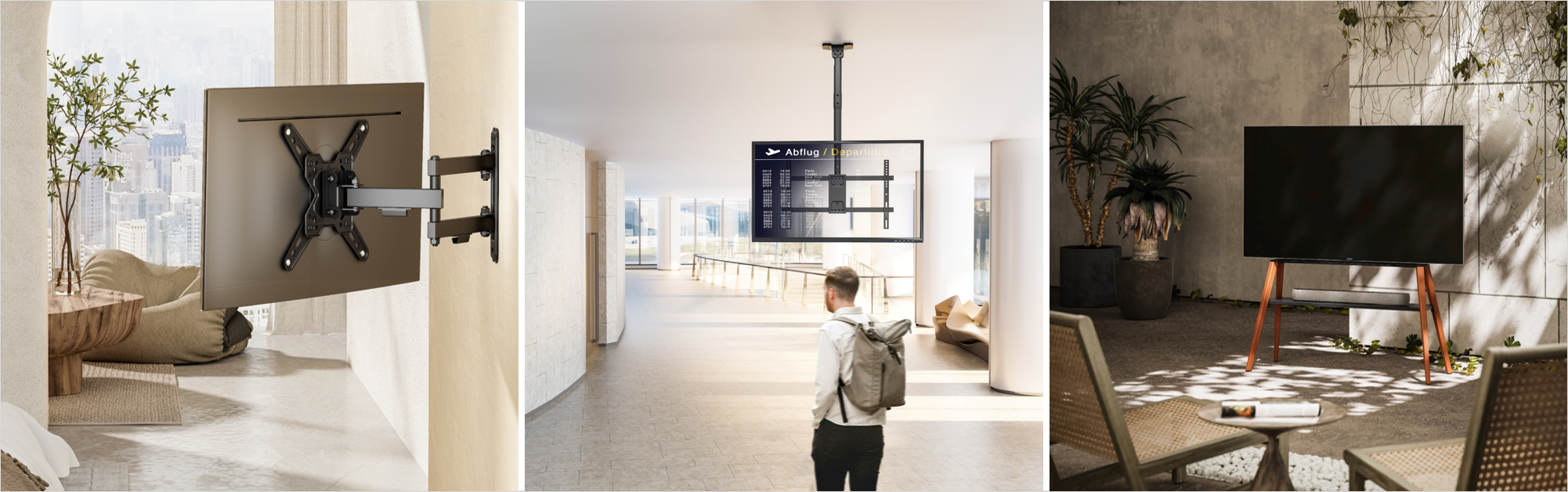
TV wall mounts are the most popular choice for home use. They save floor space, keep your TV secure, and create a clean, minimalist appearance.
Common types of TV wall mounts include:
• Fixed TV Wall Mounts Keep the TV close to the wall with no movement. Ideal for rooms where the viewing position is fixed and a slim profile is desired.
• Tilting TV Wall Mounts Allow vertical tilt to reduce glare, especially useful when the TV is mounted higher on the wall, such as above a fireplace.
• Full Motion / Articulating TV Mounts Offer the most flexibility, allowing the TV to extend, swivel, and tilt. Perfect for living rooms or bedrooms with multiple seating areas.
Wall-mounted TV brackets are ideal for modern homes and dedicated entertainment areas. Before purchasing a TV wall mount, it’s important to consider your wall type and installation requirements, including whether the wall is drywall, concrete, brick, or wood studs. You should also evaluate the installation difficulty and ensure that appropriate mounting hardware is included or available to achieve a secure and safe installation.
TV ceiling mounts are a great solution when wall mounting is not possible or practical.
They are commonly used in:
• Open-plan living spaces
• Bedrooms with limited wall space
• Commercial environments like gyms, restaurants, or offices
Many ceiling TV mounts often feature adjustable height, tilt, and swivel, allowing the screen to be positioned for optimal viewing from below. Some motorized TV ceiling mounts even allow for remote control operation, providing added convenience.
Freestanding TV mounts, including floor TV stands, tabletop TV stands, and mobile TV carts, are ideal for users who want maximum flexibility without drilling holes in walls or ceilings. Key benefits include:
• No wall or ceiling installation required
• Easy to move, adjust, and reposition
• Perfect for renters or temporary installations
Tabletop/floor TV stands and mobile TV carts are widely used in home offices, conference rooms, trade shows, exhibitions, classrooms, and modern living spaces, offering both convenience and versatility.
2. VESA Compatibility and TV Size
One of the most important factors when choosing a TV mount is VESA compatibility. What is VESA? Well, VESA refers to the standardized mounting hole pattern on the back of a TV, measured in millimeters (for example: 200×200, 400×400). This standard ensures that TVs and mounts are compatible across brands.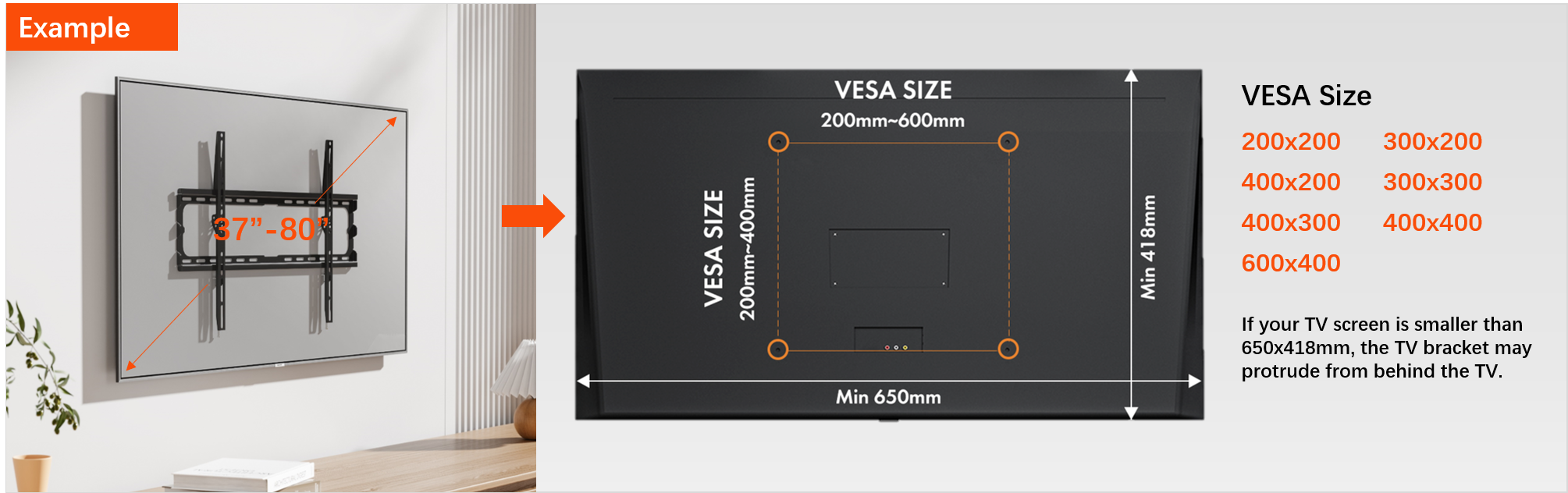
Before purchasing a TV mount, always check:
• Your TV’s VESA pattern
• The VESA range supported by the TV mount
Match the TV Mount to Your Screen Size TV mounts are also designed for specific TV size ranges.
Common categories include:
• Small: 32–55 inch TV mounts
• Medium: 55–75 inch TV mounts
• Large: 75–100 inch TV mounts
Choosing a mount that supports both the correct VESA pattern and appropriate TV size ensures a secure fit, long-term stability, and a safe viewing experience.
3. Weight Capacity: Safety Comes First
Never overlook weight capacity when choosing a TV mounting bracket.
• Check your TV’s weight (without the stand)
• Compare it with the mount’s maximum load rating
Always choose a TV mount with a higher weight capacity than your TV requires. This provides an extra safety margin and ensures long-term durability. Heavy-duty TV mounts are especially important for:
• Large-screen TVs
• OLED and QLED TVs
• Outdoor or ceiling-mounted installations
4. Viewing Height and Viewing Angle
A comfortable viewing experience depends heavily on proper viewing height and angle.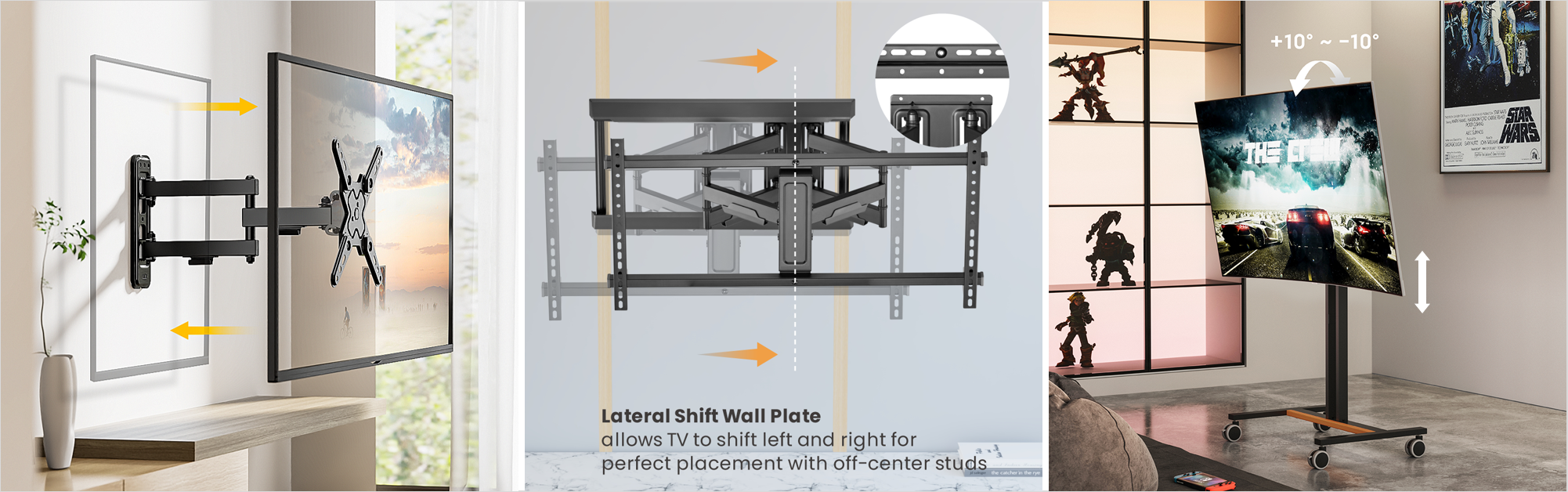
Optimal Viewing Height
The center of the TV screen should ideally be at eye level when seated. Mounting the TV too high can cause neck strain over time. If your TV must be installed higher (for example, above a fireplace), consider:
• Tilting TV wall mounts
• Adjustable TV mounts
• Ceiling mounts with height adjustment
Adjusting the Viewing Angle
If your room has multiple viewing positions, a swivel or full-motion TV mount allows you to adjust the screen direction easily.
Key features to look for:
• Swivel left and right
• Tilt up and down
• Extension for better angle control
These features are especially useful in open living spaces and multi-purpose rooms.
5. Additional Features and Important Considerations
Beyond the basics, many modern TV mounts include extra features that enhance usability and aesthetics. Built-in cable management systems help hide messy wires and create a clean, organized look. This is particularly important for wall-mounted and ceiling-mounted TVs. Also, some TV stands and carts offer storage shelves for media players or soundbars. These features are ideal for users looking for an all-in-one entertainment solution. Some TV mounts are designed for easy installation, while others may require professional setup—especially large, heavy, or motorized TV mounts.
Conclusion
Choosing the right TV mount is about balancing compatibility, safety, comfort, and functionality. By considering installation type, VESA compatibility, weight capacity, viewing height, and additional features, you can confidently select a TV mounting solution that fits your home and lifestyle. Whether you’re installing a slim TV wall mount, a flexible ceiling mount, or a versatile floor TV stand, the right choice will enhance both your viewing experience and your living space.